
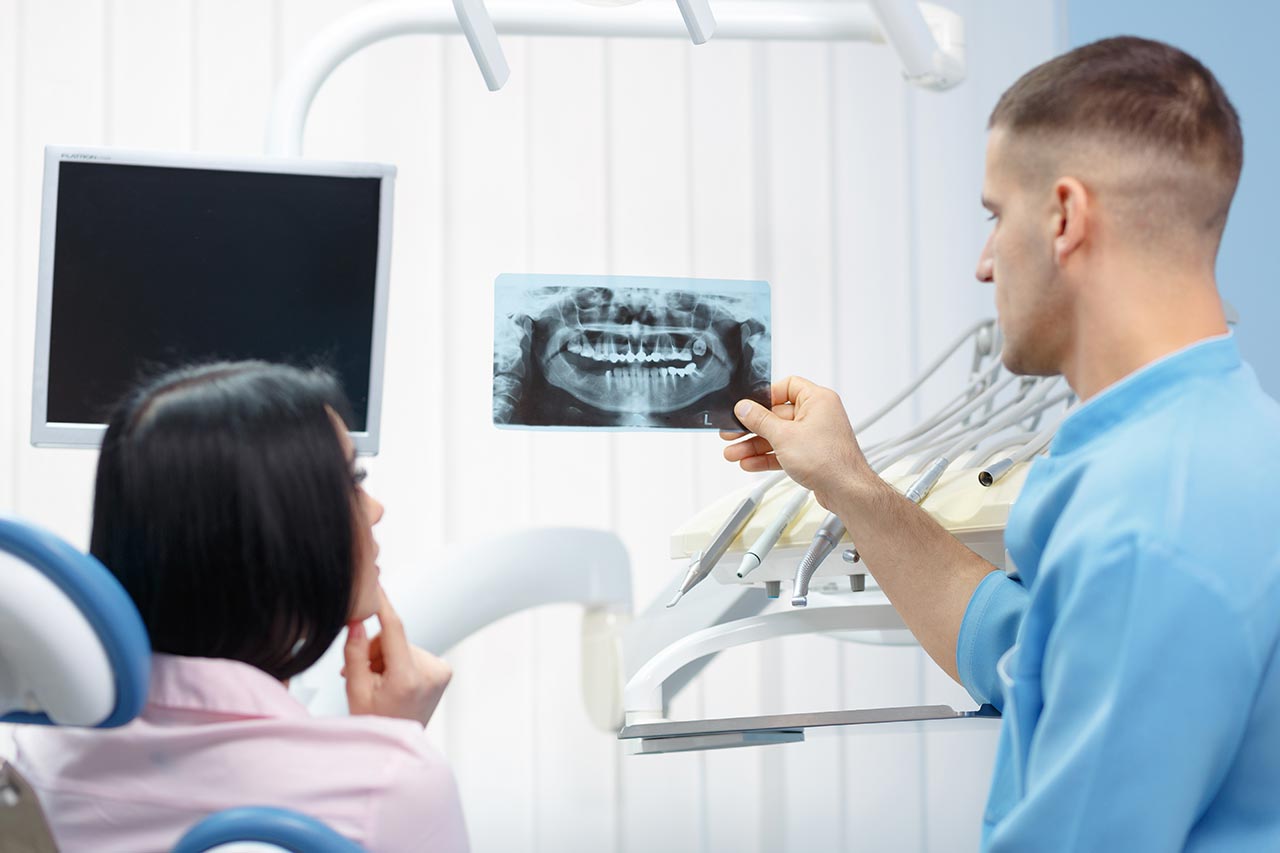
Dental X-rays are crucial in finding any problems lurking out of sight beneath the surface of your teeth enamel and below the gum line before they become a major issue. And with digital technology, they are safer than ever before.
In modern dental offices, digital X-rays have largely replaced the old film versions. They are safer for patients because they emit about 80 per cent less radiation than film X-rays. In fact, the amount of radiation from a set of digital X-rays is less than the level of radiation we’re exposed to naturally in the course of one day.
KW Emergency Dental Clinic, your Kitchener & Waterloo dental offices, are fully-digitised practices. They use digital technology as standard to look at individual teeth, and panoramic radiography to get an overall picture of the entire mouth in a single image.
Panoramic X-rays not only show the condition of the teeth – including any yet to surface – but also the state of the upper and lower jaws and surrounding tissue and structures. They are used for a general review of teeth and supporting bone, to assess wisdom teeth in particular, and as a diagnostic tool in planning orthodontic treatment.
X-rays are indispensable in detecting problems such as jaw and tooth root issues, hidden tooth decay, and gum disease including gingivitis. Discovery of these problems at an early stage is vital for an effective plan of treatment.
Without X-rays, issues not obviously apparent could go undiagnosed, resulting in progressive worsening, even to the extent of threatening your overall health. Left untreated, a gum infection can spread to other parts of the body, including the lungs, heart and brain.
Intraoral and Extraoral Digital X-Rays
Intraoral X-rays – the most common form of dental radiography – produce images from inside the mouth. They show precise details of teeth and supporting bones, enabling your dentist to evaluate tooth development and root health, detect cavities, and see how securely the jaw bone is anchoring teeth. At KW Emergency Dental Clinic, intraoral camera technology allows the patient to see exactly what the dentist is observing.
Extraoral X-rays, which are taken outside the mouth, concentrate on the bigger bones in the head, especially the lower and upper jaw. These images help your dentist to monitor the condition of the jaw joint and to spot problems such as impacted teeth.
X-Rays As Diagnostic and Preventative Measures
While X-rays are diagnostic in nature, they re also a preventative measure, helping your dentist to spot issues in your mouth before they become a major problem. An examination of your teeth without an X-ray will not reveal many issues with your teeth and surrounding tissue, including small patches of decay beneath fillings, bone infection, abscesses and tumours.
A patient’s first visit to Kitchener or Waterloo’s Emergency Dental Clinic entails a comprehensive examination with recommended full set of x-rays.
If you need further advice on the safety of dental digital X-rays or on other aspects of dental healthcare, contact us today.