
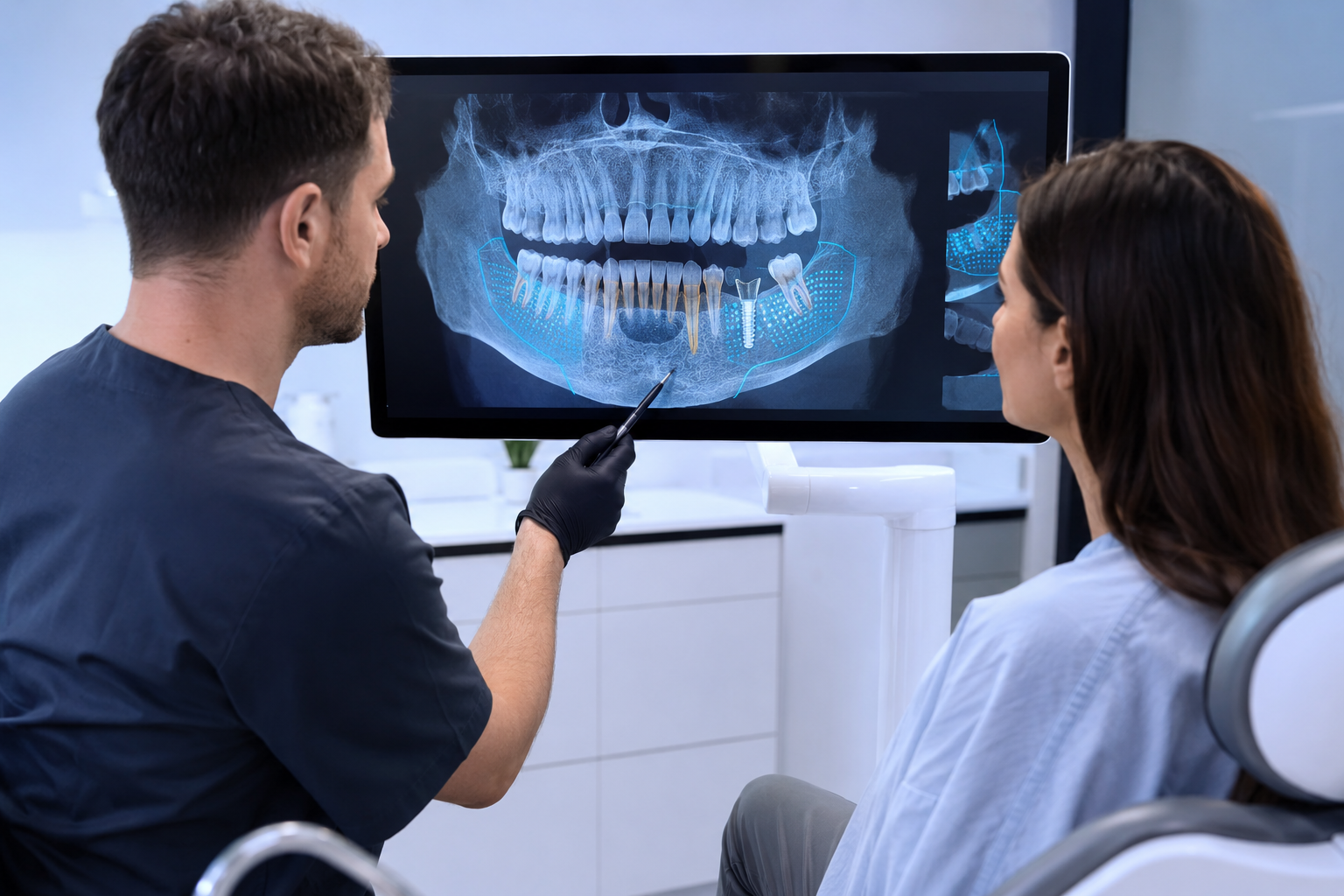
Artificial intelligence is becoming part of everyday life, from phones and cars to banking and healthcare. Dentistry is also beginning to use AI-powered tools to help dentists examine X-rays, identify patterns, and monitor changes in a patient’s oral health.
For patients, this raises an interesting question: can AI actually spot dental problems a dentist might miss?
The answer is not as simple as replacing a dentist with software. AI is better viewed as an additional set of eyes that may help dentists review certain images and findings more consistently. At Kitchener Dentist Fairway Dental, modern dental technology can support a dentist’s professional judgement while the final diagnosis and treatment recommendations remain in the hands of trained dental professionals.
How Is AI Being Used in Dentistry?
Dental AI systems are generally designed to analyze information such as digital X-rays and dental images. The software has been trained to recognize patterns that may be associated with common dental conditions.
Depending on the technology being used, AI may help highlight areas that deserve a closer look, including:
- Early signs of tooth decay
- Changes in bone levels around teeth
- Possible infections near tooth roots
- Calculus or tartar deposits visible on X-rays
- Cracks or other unusual changes in tooth structure
- Areas that may require additional examination
Instead of making a diagnosis on its own, the technology can highlight areas the dentist can then evaluate.
Can AI Find Something a Dentist Might Overlook?
Potentially, yes.
Dentists examine many details during an appointment, and dental X-rays can contain subtle changes that are difficult to see at first glance. AI software can systematically review an image and flag areas that match patterns it has been trained to recognize.
For example, a very small area of decay between two teeth may be difficult to distinguish on an X-ray. An AI system may highlight that location, encouraging the dentist to examine it more closely.
This does not necessarily mean the dentist would have missed the problem. It simply provides another layer of information that may support the diagnostic process.
AI can also be useful when comparing images taken months or years apart. Small changes in bone levels or tooth structure may become easier to recognize when technology consistently tracks them over time.
Why AI Cannot Replace Your Dentist
AI may be good at recognizing patterns, but it does not understand the complete patient in the way a dentist does.
An X-ray is only one part of a dental examination. Your dentist also considers factors such as:
- Your symptoms
- Sensitivity or pain
- Gum health
- Previous dental treatment
- Existing fillings, crowns, or implants
- Your medical and dental history
- Changes noticed during a physical examination
- Your individual risk of developing certain dental problems
Something highlighted by AI may turn out to be completely normal, while another condition may not appear clearly on an X-ray at all.
Dentists combine clinical experience, examination findings, patient history, diagnostic images, and other information before recommending treatment.
That human judgement remains essential.
What Dental Problems Can Be Easy to Miss Early?
Many dental conditions develop gradually and may not cause noticeable symptoms during their earliest stages.
Early Tooth Decay
Small cavities can develop without causing pain. Decay between teeth may be particularly difficult for patients to notice because it is usually not visible in the mirror.
Gum Disease
Early gum disease may cause mild bleeding or tenderness, but some people experience very few symptoms. More advanced gum disease can eventually affect the bone that supports the teeth.
Cracked Teeth
Tiny cracks are not always easy to identify. Some cracks may cause discomfort only when chewing certain foods or when exposed to hot or cold temperatures.
Dental Infections
Infections near the roots of teeth may sometimes develop without severe pain, particularly in teeth that have previously undergone treatment.
Bone Loss
Changes in the bone supporting the teeth can occur slowly. Comparing dental X-rays over time can help dentists monitor these changes.
AI-assisted imaging may help highlight some of these findings, but a dentist must still determine what they mean.
Symptoms You Should Not Ignore
Technology is useful, but patients should also pay attention to changes in their own mouths.
Consider scheduling a dental examination if you notice persistent tooth sensitivity, pain while chewing, swollen or bleeding gums, bad breath that does not improve, a loose adult tooth, swelling around the gums or jaw, or a tooth that suddenly changes colour.
You should also contact a dentist if a filling, crown, or other restoration feels loose or damaged.
Some dental conditions cause little or no discomfort until they become more advanced, which is one reason regular examinations remain important even when everything feels normal.
How Preventive Dental Care Helps
The best opportunity to manage many dental problems is often before they become painful.
Routine dental examinations allow your dental team to check your teeth, gums, bite, and existing restorations. When appropriate, dental X-rays may reveal areas that cannot be examined visually.
At Kitchener Dentist Fairway Dental, preventive visits can help establish your oral health history. Having previous examinations and images available makes it easier to identify changes that develop over time.
Between appointments, good preventive habits are equally important.
Brush twice a day using fluoride toothpaste, clean between your teeth daily with floss or another recommended interdental cleaner, limit frequent sugary snacks and drinks, and avoid using teeth to open packages or bite hard objects.
If you grind or clench your teeth, ask your dentist whether additional protection may be appropriate.
What Happens If AI Flags a Possible Problem?
A highlighted area does not automatically mean you need dental treatment.
Your dentist may examine the tooth directly, review additional X-rays, compare older images, test the tooth, or simply continue monitoring the area.
Treatment depends on what the dentist finds.
For example, early decay may sometimes be monitored or managed with preventive measures, while a larger cavity may require a filling. Gum problems may require professional cleaning and improvements to home care. Infections or significant tooth damage may require more extensive treatment.
The goal is not to treat everything that technology detects. The goal is to use all available information to make an appropriate clinical decision.
Technology Works Best Alongside Professional Care
Artificial intelligence can make dental imaging and record analysis more consistent, but it is not a substitute for regular dental examinations.
The most useful approach combines modern technology with the knowledge and experience of a dental professional who understands your individual needs.
If it has been a while since your last dental examination, or you have noticed pain, sensitivity, bleeding gums, or another change in your oral health, contact the office at 519-893-9494 to arrange an appointment with Kitchener Dentist Fairway Dental.
DISCLAIMER: The advice offered is intended to be informational only and generic in nature. It is in no way offering a definitive diagnosis or specific treatment recommendations for your particular situation. Any advice offered is no substitute for proper evaluation and care by a qualified dentist.