
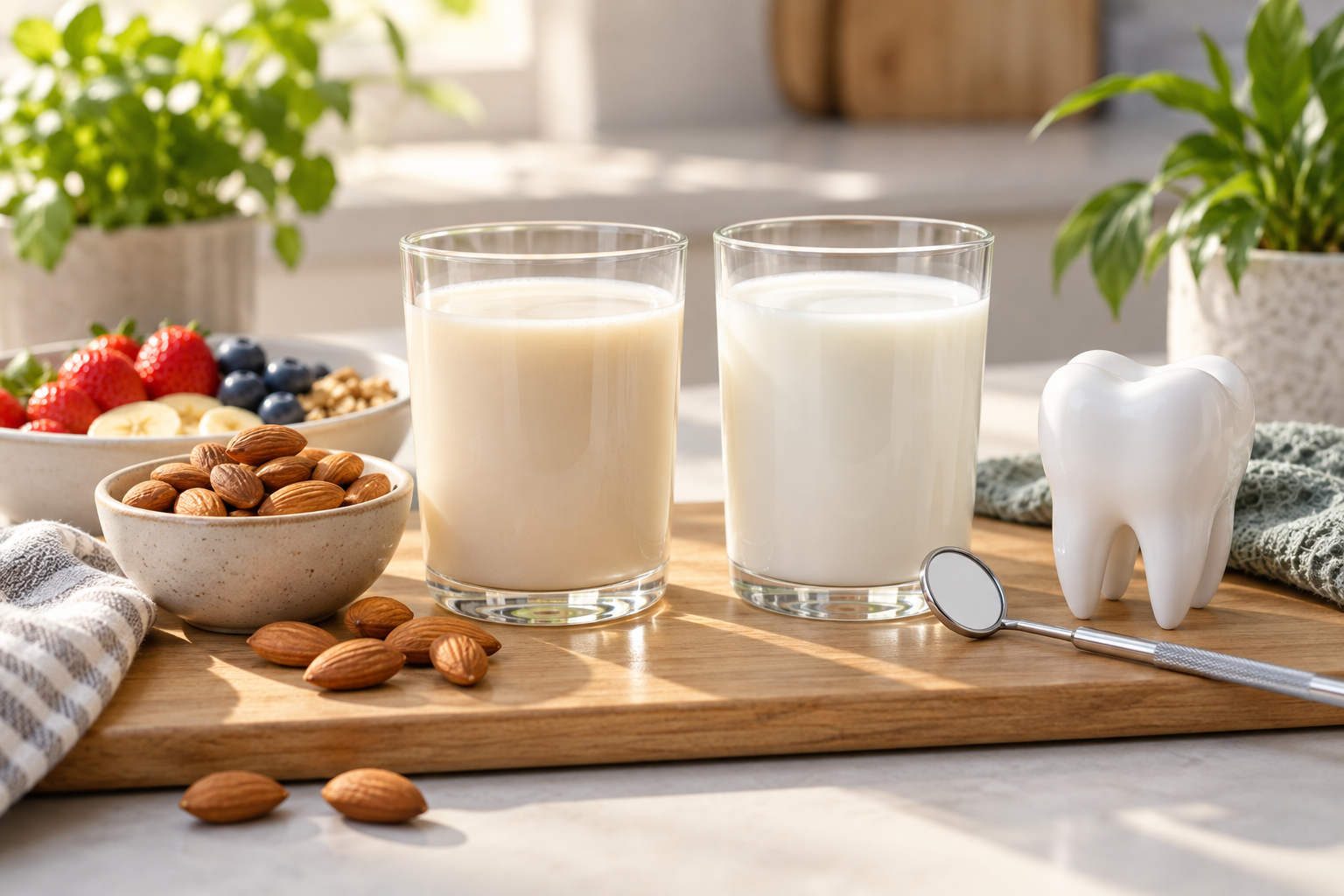
Milk is a regular part of many Canadian households, whether it is poured over cereal, added to coffee, blended into smoothies, or served with meals. But with so many people switching from traditional dairy milk to plant-based options, one question comes up more often: is almond milk as good for your teeth as cow’s milk?
For patients and families trying to make tooth-friendly choices, understanding how different drinks affect your enamel can help reduce the risk of cavities over time. At Kitchener Dentist Fairway Dental, we often remind patients that what you drink throughout the day can be just as important as what you eat for protecting your teeth.
Why Milk Can Matter for Cavity Prevention
Cavities develop when bacteria in the mouth feed on sugars and produce acids. These acids can gradually weaken tooth enamel, especially when teeth are frequently exposed to sugar throughout the day.
Milk can be beneficial because certain types contain nutrients that support strong teeth. Calcium and phosphorus are especially important because they help maintain enamel’s mineral structure.
However, the effect on your teeth depends on the type of milk you choose and whether it contains added sugar.
How Cow’s Milk Affects Your Teeth
Cow’s milk naturally contains several nutrients that support dental health, including:
- Calcium
- Phosphorus
- Protein
- Vitamin D in many fortified Canadian products
Calcium and phosphorus help keep enamel strong and may replace minerals lost when your mouth becomes acidic.
Cow’s milk also contains lactose, which is a natural sugar. Although oral bacteria can use lactose, it is generally considered less cavity-promoting than many added sugars found in soft drinks, juice, flavoured coffee drinks, and sweetened plant-based beverages.
Plain cow’s milk is therefore usually considered a fairly tooth-friendly beverage, especially when consumed with meals rather than sipped continuously throughout the day.
What About Almond Milk?
Unsweetened almond milk can also be a reasonable option for your teeth, particularly for people who avoid dairy because of allergies, lactose intolerance, dietary preferences, or lifestyle choices.
Many commercial almond milks are fortified with calcium and vitamin D, which can help support healthy teeth and bones.
However, not all almond milk products are the same.
Some flavoured or sweetened varieties contain significant amounts of added sugar. Vanilla, chocolate, and other flavoured almond milks may expose teeth to more cavity-causing sugars than unsweetened versions.
When choosing almond milk, check the nutrition label and look for:
- “Unsweetened” on the package
- Little or no added sugar
- Added calcium
- Added vitamin D
Shaking the container before serving also matters because added calcium can settle at the bottom.
So, which one is better for Preventing Cavities?
For most people, plain cow’s milk has a slight advantage because it naturally contains calcium, phosphorus, and protein that support tooth structure.
However, unsweetened, calcium-fortified almond milk can still be a tooth-friendly alternative.
The bigger dental concern is usually not whether the milk comes from cows or almonds. It is whether the drink contains added sugar and how frequently you consume it.
At Kitchener Dentist Fairway Dental, we encourage patients to focus on their overall diet rather than relying on a single food or drink to prevent cavities.
Sweetened Milk Can Change the Picture
Flavoured milk can increase the risk of cavities.
Chocolate cow’s milk, sweetened almond milk, flavoured oat milk, and similar drinks may contain added sugars. When these drinks are sipped slowly over several hours, oral bacteria have more opportunities to produce acid.
This is especially important for children who may carry bottles, cups, or cartons of flavoured drinks throughout the day.
If you or your child enjoys flavoured milk, it is better to have it with a meal rather than sip it repeatedly between meals.
Water remains the best everyday drink for hydration and rinsing away food particles.
Signs That Cavities May Be Developing
Early cavities do not always cause pain, which is why regular dental examinations are important.
Possible signs of tooth decay may include:
- Tooth sensitivity to cold, heat, or sweets
- Pain when biting or chewing
- Visible dark or white spots on a tooth
- A small hole or rough area in the enamel
- Toothache
- Food regularly getting stuck between certain teeth
- Bad breath that does not improve with brushing
If you notice any of these symptoms, schedule a dental visit rather than waiting for the problem to become painful.
Simple Ways to Lower Your Cavity Risk
Choosing the right milk is only one part of cavity prevention.
A few everyday habits can make a much bigger difference:
Brush twice a day with fluoride toothpaste, spending about 2 minutes cleaning all surfaces of your teeth.
Floss or clean between your teeth every day. Toothbrush bristles cannot fully reach the narrow spaces between teeth.
Limit frequent snacking and sugary drinks. Each exposure to sugar can create another period of acid activity in the mouth.
Choose water between meals whenever possible.
If you drink milk, smoothies, juice, or other sugary beverages, try to have them with a meal instead of sipping them continuously.
Children should avoid going to bed with bottles or cups containing milk or sweetened drinks because prolonged overnight exposure can increase the risk of tooth decay.
Why Regular Dental Checkups Still Matter
Even people who brush and floss carefully can develop cavities in hard-to-see or hard-to-reach areas.
Regular dental exams allow your dentist to identify early changes in the enamel before they become larger problems. Professional cleanings also remove hardened plaque that normal brushing at home can’t remove.
Your dentist can also review your diet, fluoride exposure, brushing technique, and cavity risk and suggest preventive treatments when appropriate.
Making the Right Choice for Your Family
Cow’s milk and unsweetened almond milk can both fit into a tooth-friendly diet. Plain cow’s milk naturally provides several minerals that support enamel, while fortified unsweetened almond milk can be a suitable alternative for people who prefer plant-based beverages.
The most important step is to avoid added sugars whenever possible and maintain consistent brushing, flossing, and dental checkups.
If you have questions about cavities, tooth sensitivity, your child’s dental health, or which everyday habits are best for your teeth, Kitchener Dentist Fairway Dental is here to help.
To book an appointment or speak with our dental team, contact the office today at 519-893-9494.
DISCLAIMER: The advice offered is intended to be informational only and generic in nature. It is in no way offering a definitive diagnosis or specific treatment recommendations for your particular situation. Any advice offered is no substitute for proper evaluation and care by a qualified dentist.